
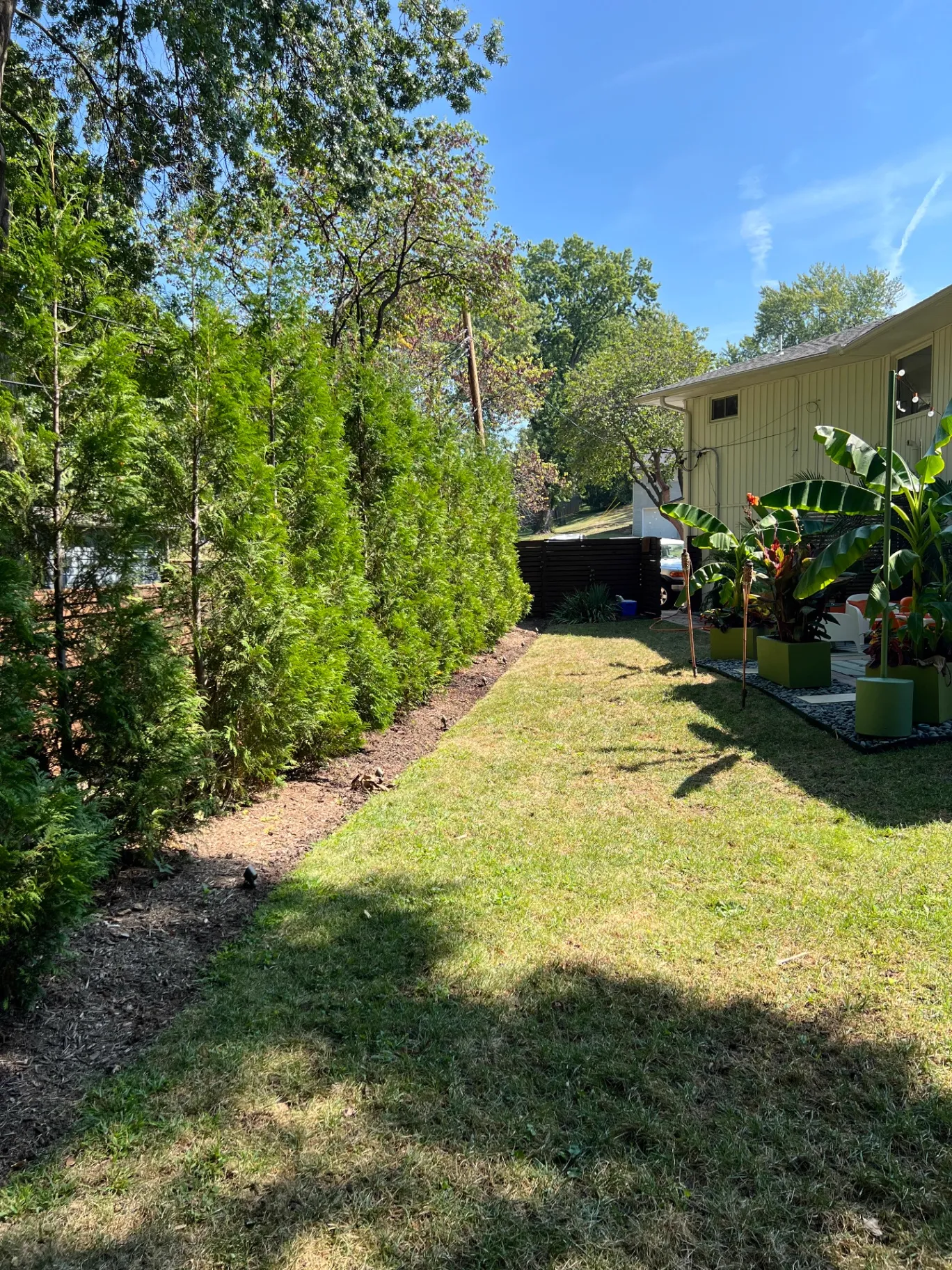
For Kansas City properties—especially commercial sites—smart landscaping isn't just curb appeal. The right mix of trees, shrubs, grasses, and perennials can lower energy costs, manage stormwater, stabilize soils, reduce maintenance, and elevate your site's image for tenants and customers. Below are the top benefits, our design approach, a KC-tough plant list, and simple care tips.
1) Cooler buildings & lower energy bills
Strategically placed shade trees reduce heat gain on west and south façades and parking lots—cutting summer cooling demand.
Quick tip: Plant large-canopy shade trees ~15–25 ft from buildings (varies by mature spread). Use smaller ornamentals 8–12 ft from structures and utilities.
2) Stormwater management that actually works
Deep-rooted trees and native plantings slow, spread, and soak rainfall. Bioswales, rain gardens, and tree pits reduce puddling, protect pavements, and ease the load on site drains—ideal for large roofs and parking areas.
Related service: Drainage & Site Work
3) Slope & soil stability
Root systems "knit" soil together, preventing washouts along embankments, detention basins, and cut/fill slopes. Native grasses (with dense fibrous roots) are standouts for stabilizing disturbed soils.
4) Higher property value & better first impressions
Healthy trees and layered plantings make properties feel established and well-maintained—supporting higher rents, faster lease-ups, and stronger brand perception.
Related service: Landscaping
5) Privacy, screening & noise reduction
Evergreens and mixed hedges offer year-round screening for dumpsters, mechanicals, loading areas, and neighboring uses—improving views and reducing noise.
6) Habitat & biodiversity (pollinators win, too)
Native trees, shrubs, and perennials support birds, bees, and butterflies—boosting ecological resilience and reducing pest pressure over time.
7) Cleaner air & a healthier site
Foliage captures dust and particulates while trees absorb pollutants—meaning cleaner air around entries, patios, and walkways.
8) Safer, clearer circulation
Landscape can guide people where you want them—framing entries and crosswalks while protecting important sightlines for vehicles.
9) Lower lifetime maintenance
"Right plant, right place" with KC-tough natives reduces irrigation, mowing, and replacements—especially paired with drip lines and quality mulch.
KC-Tough Trees & Plants (native-forward)
Selections depend on sun, soil, drainage, de-icing salt, and available space. We'll confirm on a site walk.
Shade / Structure Trees
- Bur Oak (Quercus macrocarpa) – long-lived, wide canopy
- Swamp White Oak (Q. bicolor) – tolerates wetter soils
- Shumard Oak (Q. shumardii) – great for streets & parking islands
- Bald Cypress (Taxodium distichum) – handles wet/dry swings
- Kentucky Coffeetree (Gymnocladus dioicus) – urban-tough, open canopy
- Blackgum (Nyssa sylvatica) – outstanding fall color
- Hackberry (Celtis occidentalis) – adaptable workhorse
Ornamental / Small Trees
- Eastern Redbud (Cercis canadensis) – early spring flowers, part shade tolerant
- Serviceberry (Amelanchier arborea) – four-season interest
- American Hornbeam (Carpinus caroliniana) – refined texture for courtyards
Shrubs (Screening & Structure)
- Arrowwood Viburnum (Viburnum dentatum) – reliable hedge, wildlife value
- Ninebark (Physocarpus opulifolius) – drought-tolerant, spring bloom
- Fragrant Sumac (Rhus aromatica 'Gro-Low') – great on slopes
- Buttonbush (Cephalanthus occidentalis) – ideal for rain gardens
- Chokeberry (Aronia melanocarpa) – flowers, fruit, and fall color
Grasses & Perennials
Stormwater & Pollinators:
- Switchgrass (Panicum virgatum), Little Bluestem (Schizachyrium scoparium), Prairie Dropseed (Sporobolus heterolepis)
- Purple Coneflower (Echinacea purpurea), Black-eyed Susan (Rudbeckia), Bee Balm (Monarda), Asters (Symphyotrichum)
Our Design-Build Process (ROI-focused)
Site walk & goals
Drainage, utilities, traffic flow, sun/wind, maintenance goals.
Soils & grading
Regrade or amend to keep water away from structures and into plantable areas (rain gardens/bioswales).
Right plant, right place
Mature size, salt/wind tolerance, soil volume, visibility, safety.
Irrigation strategy
Drip for trees/shrubs and high-value beds; smart controllers & moisture sensors.
Quality install
Correct hole size, root flare at grade, proper staking (only when needed), premium mulch (no "volcano" mulching).
Maintenance hand-off
A simple plan your team (or ours) can execute.
Related services: Design • Excavation & Prep • Landscaping
First-Year Care Plan (simple & effective)
Watering
Deep soak 2–3×/week in summer for new trees/shrubs; reduce in spring/fall and pause with adequate rainfall.
Mulch
Maintain a 2–3" layer; keep mulch 2–3" away from trunks and stems.
Weeding
Monthly quick passes prevent seed banks and reduce labor later.
Pruning
Light structural pruning in dormancy or right after bloom (species-dependent).
Quarterly check
Stakes, irrigation emitters, mulch depth, and plant health.
Siting & Safety Tips
- • Call 811 before you dig.
- • Keep large shade trees clear of overhead lines and maintain driveway sight triangles.
- • Allow adequate soil/root volume near pavements and islands (tree wells/root paths).
- • Respect mature canopy spread for buildings, signage, and lighting.
FAQs
How far from a building should I plant a shade tree?
Typically 15–25 ft for large canopy trees; 8–12 ft for small ornamentals—always adjusted for mature spread and utilities.
Do I need irrigation?
Not always, but drip irrigation is strongly recommended for the first 2–3 seasons to reduce loss and speed establishment.
What if my site floods or puddles?
We can regrade, add subsurface piping, or design rain gardens/bioswales with species that tolerate periodic wet feet.
Can landscaping lower my maintenance?
Yes—native, drought-tough plants + mulch + drip lines = fewer replacements, less mowing, and better long-term performance.
When is the best time to plant in Kansas City?
Spring and fall are ideal. Summer installs succeed with proper irrigation and mulch.
Explore services: Landscaping • Design • Drainage