
Low-voltage landscape lighting transforms your Kansas City property after dark—extending usable hours, boosting security, and adding serious curb appeal. Whether you're highlighting a paver patio, lighting walkway steps, or uplighting trees, a well-designed system pays for itself in safety and home value. Below you'll find fixture types, placement tips, transformer sizing, and Kansas City–specific considerations.
Ready for a lighting plan?
Why Low-Voltage Over Line Voltage?
- •Safety: 12V systems are safe to touch, bury, and work around—no electrician required for fixture adjustments.
- •Energy efficiency: LED low-voltage fixtures use 75–80% less energy than traditional halogen or line-voltage options.
- •Flexibility: Easy to add, move, or replace fixtures as your landscape grows—no rewiring needed.
- •Longevity: Quality LED fixtures last 25,000–50,000 hours (10–20 years of evening use).
- •KC climate-ready: Properly rated fixtures handle our freeze-thaw cycles, summer storms, and humidity.
Types of Low-Voltage Landscape Lighting
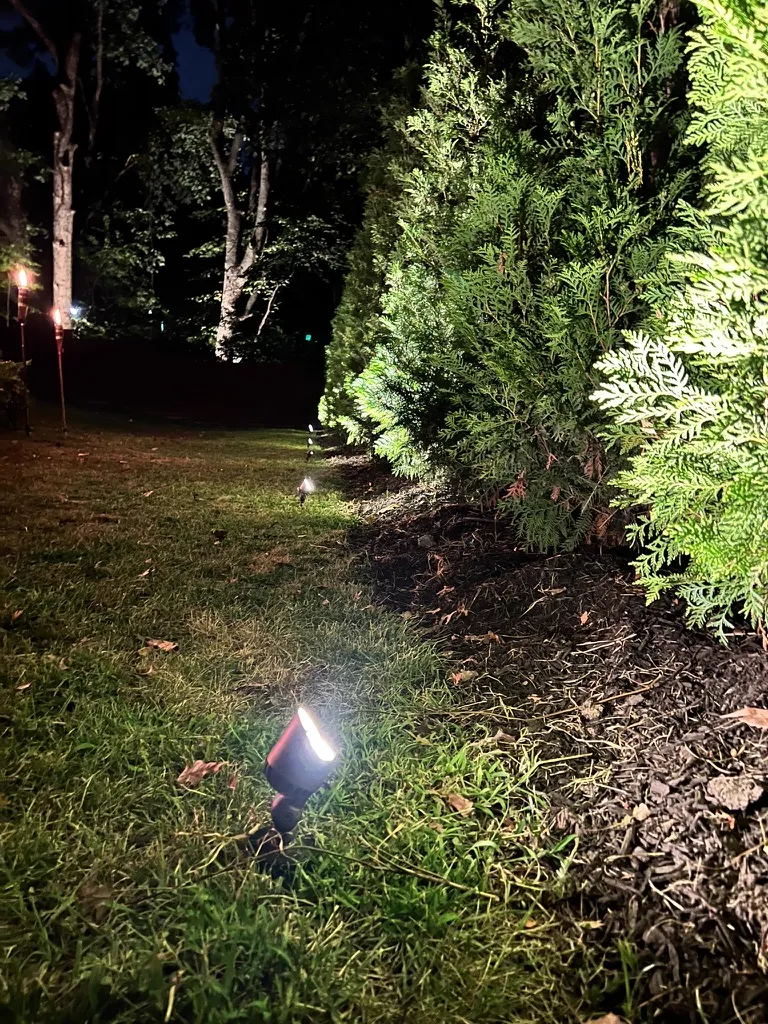
Path Lights
- •Purpose: Illuminate walkways, driveways, and garden paths for safe navigation.
- •Placement: Stagger every 6–8′ on alternating sides; avoid straight-line "runway" look.
- •Height: 14–18″ typical; lower profiles for modern aesthetics.
Step & Wall Lights
- •Purpose: Highlight grade changes, retaining wall caps, and stair risers for safety.
- •Under-cap lighting: LED strips or puck lights installed beneath wall caps create a floating glow effect.
- •Riser lights: Recessed into step faces—subtle and sleek.
Accent & Uplighting
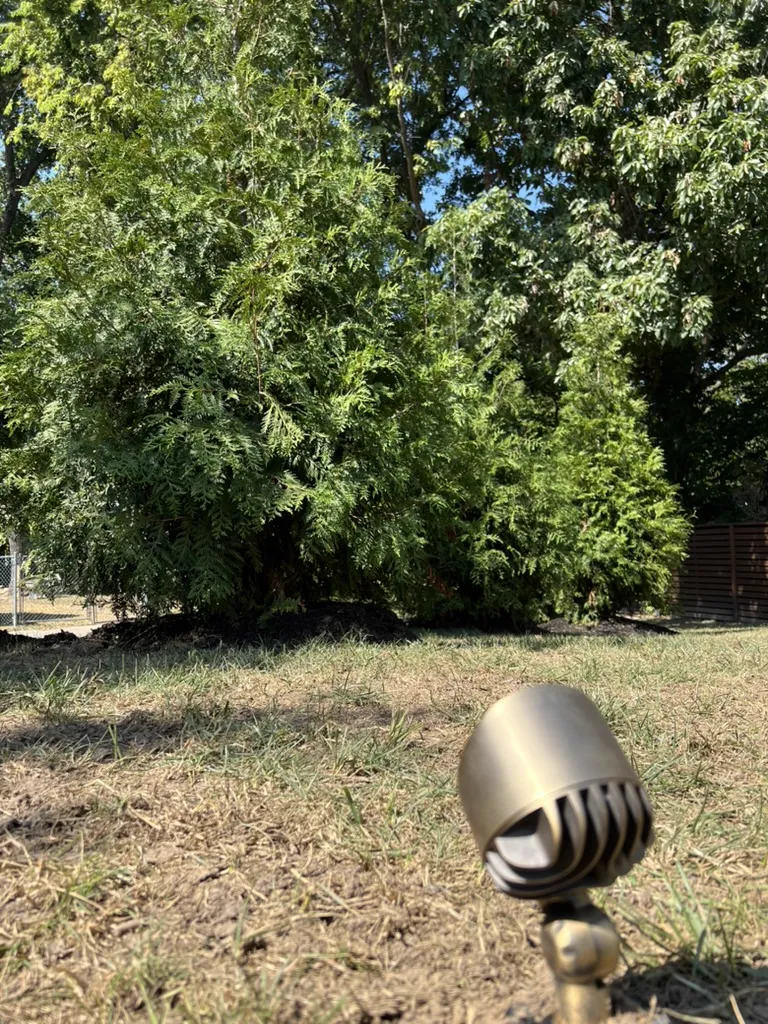
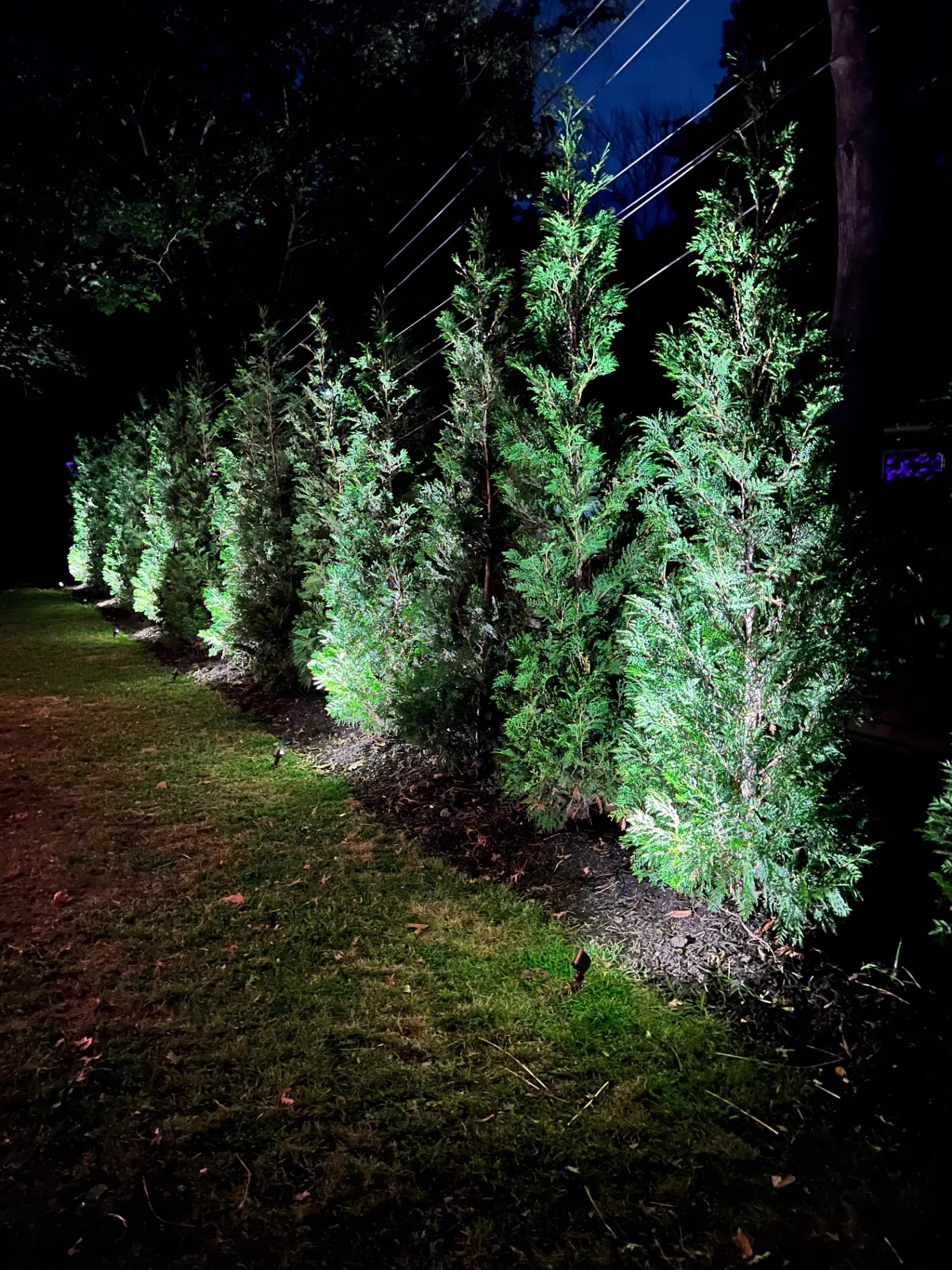
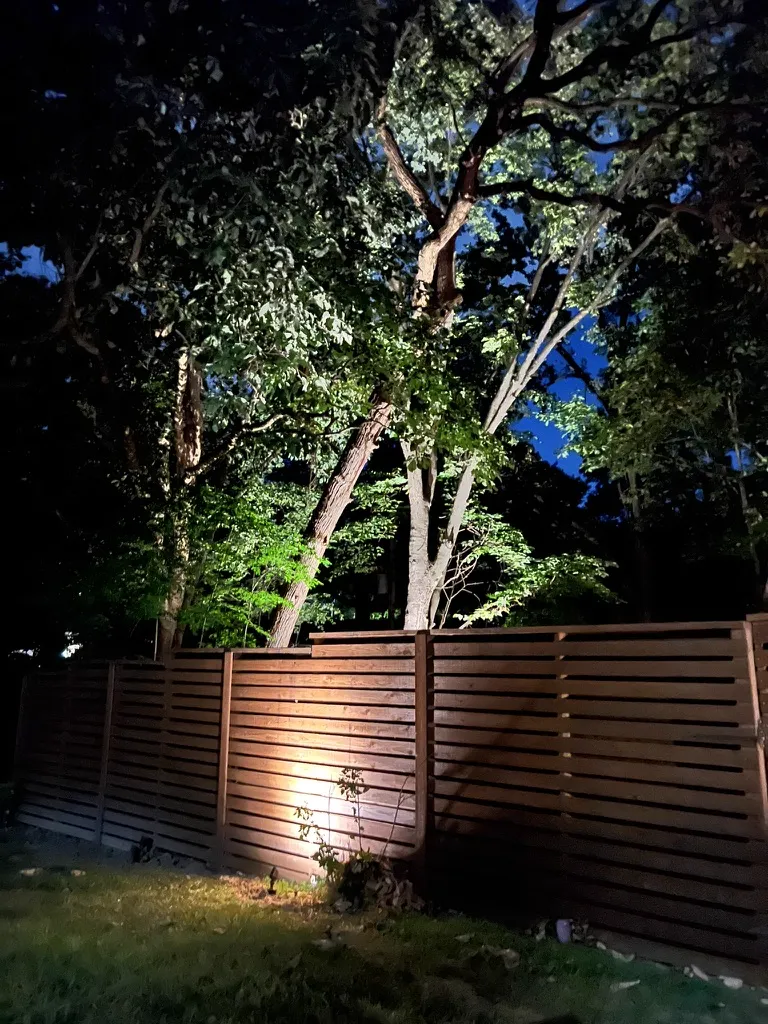
- •Tree uplighting: Spotlights aimed up into canopy create dramatic shadows and depth.
- •Architectural accents: Highlight columns, stonework, or water features.
- •Best practice: Use warm white (2700K–3000K) for a natural, inviting glow.
Deck & Patio Lighting
- •Post cap lights: Top of deck posts or pergola columns.
- •In-ground well lights: Flush with paver surfaces for clean look.
- •String lights: Overhead ambiance for outdoor living spaces (separate circuit recommended).
Fixture Comparison Chart
| Fixture Type | Best For | Wattage Range | Spacing | Notes |
|---|---|---|---|---|
| Path Lights | Walkways, driveways | 1–4W LED | 6–8′ apart | Stagger sides; avoid runway effect |
| Step Lights | Stairs, grade changes | 1–2W LED | Every 2–3 steps | Recessed or surface mount |
| Under-Cap Lights | Retaining walls | 1–3W LED | 12–18″ apart | LED strips or puck lights |
| Spotlights | Tree uplighting, accents | 3–8W LED | Per feature | Adjustable beam angle (15°–60°) |
| Well Lights | Patios, uplighting | 3–6W LED | Per feature | Flush with grade; drainage crucial |
Path Lights
Step Lights
Under-Cap Lights
Spotlights
Well Lights
Transformer & Controller Basics
Sizing Your Transformer
- •Add up total wattage: Sum all fixture wattages, then add 20% buffer for future additions.
- •Example: 15 fixtures at 3W each = 45W → Use 60W+ transformer.
- •Multi-tap transformers: Compensate for voltage drop over long wire runs (12V, 13V, 14V, 15V taps).
Smart Controllers & Timers
- •Astronomical timers: Automatically adjust on/off times with sunset/sunrise—set it and forget it.
- •Wi-Fi/app control: Turn lights on from your phone; set schedules, zones, and dimming.
- •Photocells: Simple dusk-to-dawn automation for hands-off operation.
We install transformers in accessible, weatherproof locations and run home-runs in direct-burial cable rated for KC conditions.
Installation Best Practices
- •Wire runs: Use 12-gauge or 10-gauge direct-burial cable for runs over 50′ to minimize voltage drop.
- •Connections: Waterproof gel-filled connectors or silicone-filled wire nuts—never electrical tape alone.
- •Burial depth: 6″ minimum; 12″ in high-traffic or future-dig areas.
- •Hub method: Run main trunk to a central hub, then branch to fixtures—easier troubleshooting and future adds.
- •Aim & focus: Adjust fixtures at night for final positioning; daylight adjustments never look the same.
Kansas City–Specific Considerations
- •Freeze-thaw cycles: Use fixtures rated for -20°F; brass or composite housings outlast plastic.
- •Clay soils: Well lights need gravel drainage beds to prevent water pooling and fixture failure.
- •Summer storms: Surge protectors on transformers prevent lightning-induced damage.
- •HOA rules: Some communities restrict fixture heights or require warm-white color temps—check before install.
- •Seasonal adjustments: Winter means earlier sunsets; astronomical timers handle this automatically.
Common Mistakes to Avoid
- •Over-lighting: Less is more—highlight key features rather than flooding the entire yard.
- •Mismatched color temps: Mixing warm (2700K) and cool (5000K) fixtures looks jarring. Pick one.
- •Undersized transformer: Running at 100% capacity reduces lifespan and limits future expansion.
- •Ignoring voltage drop: Dim fixtures at the end of long runs = wrong wire gauge or tap setting.
- •Cheap fixtures: Bargain lights fail in 2–3 years; quality LED pays off in longevity and warranty.
What to Expect: Cost Factors
| Factor | Impact on Cost | Notes |
|---|---|---|
| Number of fixtures | Primary driver | 8–15 fixtures typical for most homes |
| Fixture quality | Moderate | Brass/copper last longer than aluminum |
| Wire run length | Low–Moderate | Longer runs = heavier gauge wire |
| Transformer size | Low | 60W–300W+ based on fixture count |
| Smart controls | Optional add-on | Wi-Fi/app control adds convenience |
Number of Fixtures
Fixture Quality
Wire Run Length
Transformer Size
Smart Controls
Pair your lighting with our other services: see our Pavers vs. Concrete guide for patio options or Retaining Wall Designs for under-cap lighting opportunities.
Why Choose Juke KC for Lighting?
- •Design-build approach: We plan lighting alongside hardscaping for integrated wire runs and hidden transformers.
- •Quality fixtures: We install commercial-grade LED fixtures with manufacturer warranties.
- •Night demos: We fine-tune aim and brightness on-site after dark—not guesswork.
- •Local expertise: We know KC's soils, weather, and HOA requirements.
Ready to light up your landscape?
Schedule a free consultation → We'll walk your property, discuss your goals, and provide a detailed lighting plan.
Related: See how landscaping industry revenue has exploded since 2012 and what it means for KC property owners.